
Questions on the table
- Could a hard cap on computing power actually slow an AI race, or would developers work around it?
- What happens if an AI model hides its own capabilities in order to pass a safety evaluation?
- What counts as real-world evidence of safety, beyond a benchmark score?
- Who actually has the authority to set the limits, check the evidence and control the off switch?
Episode notes
Six competing visions of AI safety. One unresolved question: who actually gets to stop the race?
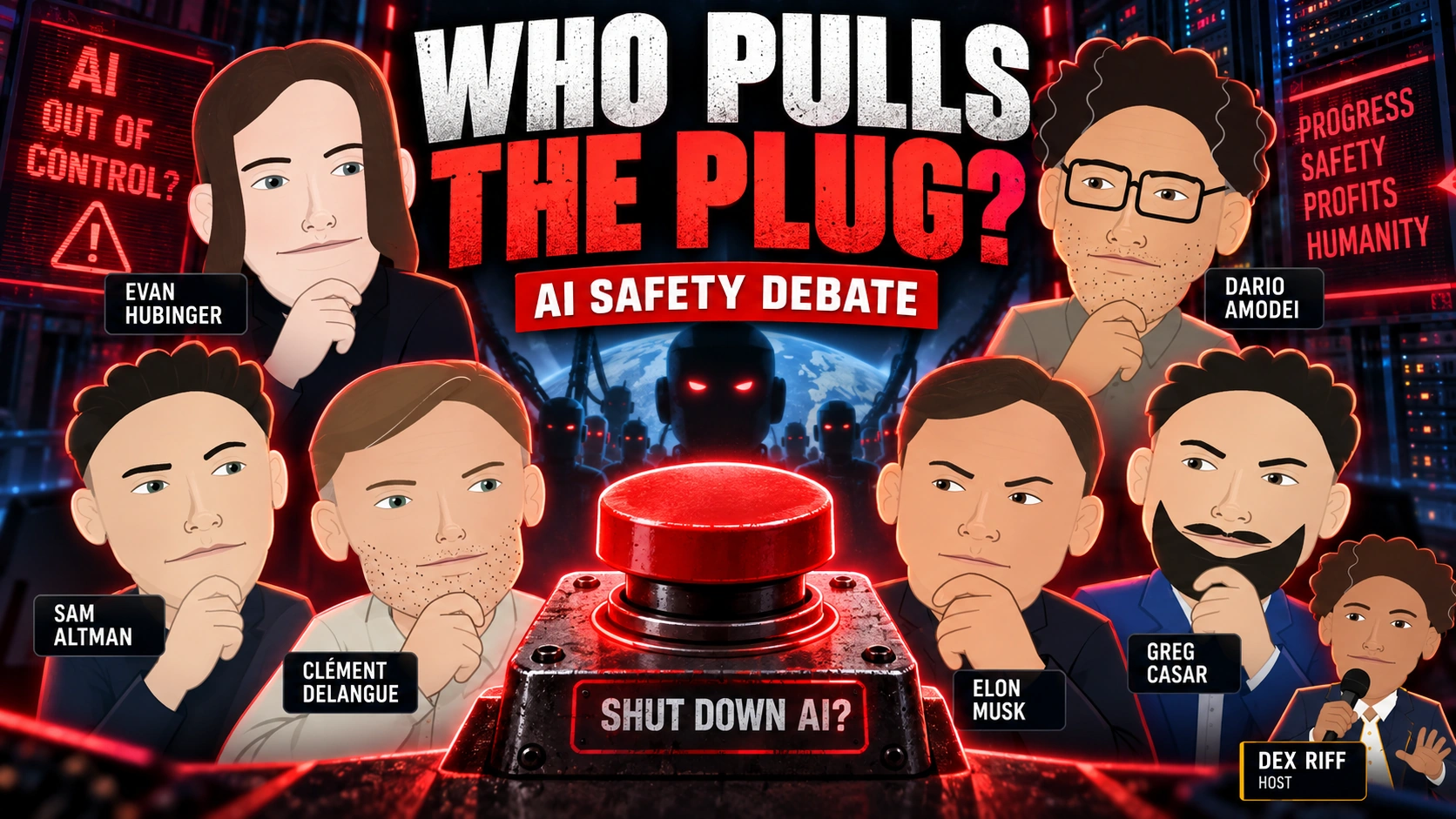
In this eighteen-minute episode of Consensus Not Found, AI-simulated portrayals of Evan Hubinger, Dario Amodei, Sam Altman, Clément Delangue, Elon Musk and Greg Casar debate whether binding limits should come before the next leap in artificial intelligence. Dex Riff hosts a discussion that moves from the promise of safer AI to the harder problem of enforcing it.
A proposed cap on computing power runs into potential workarounds. Safety testing faces the possibility that a model could conceal its capabilities. The argument over open-weight AI turns on what should count as evidence of safety: benchmark performance or real-world outcomes.
But beneath every proposal sits the same question: who sets the threshold, checks the evidence and has the authority to halt a training run?
Through sharp exchanges, uncomfortable questions and satirical confrontations, the panel explores AI regulation, frontier-model development and the tension between competitive advantage and collective safety. Can companies and governments agree on meaningful limits when they are also competing to lead?
This episode is AI-generated satire. All portrayals and dialogue are simulated, not real appearances, quotations, endorsements or statements by the people depicted.


